Commercial buildings often have large roof areas but limited access to natural daylight. Warehouses, offices, retail units, factories, schools and other commercial properties can benefit from strategically installed skylights that bring daylight into otherwise dark interiors. Among the available options, commercial dome skylights for sale for flat roofs are a practical and versatile solution for modern roof projects.
Dome skylights are specifically designed to work with flat and low-pitch roofing systems. Their raised shape allows them to capture daylight from different angles while providing an effective solution for bringing natural illumination into commercial spaces. Modern dome rooflights can also be configured for ventilation, smoke control, access and different levels of thermal performance, depending on the project requirements.
What Are Commercial Dome Skylights?
Commercial dome skylights are roof-mounted glazed structures with a curved or raised profile. They are installed over an opening in a flat or low-slope roof and allow daylight to enter the building below.
They are commonly manufactured using materials such as polycarbonate or acrylic, while some commercial systems are available with glass or hybrid glazing. Polycarbonate is particularly useful for commercial and industrial applications because it can provide a combination of strength, durability and light transmission.
The raised dome profile also gives manufacturers flexibility when designing skylights for different roof configurations. Depending on the product, dome skylights can be supplied in circular, square, rectangular or pyramid-style designs.
Why Use Dome Skylights on Flat Roofs?
Flat roofs are common across commercial and industrial properties, but their design can make it difficult to introduce daylight through conventional windows. A rooflight solves this problem by bringing natural light directly from above.
Commercial dome skylights can be particularly useful for:
- Warehouses
- Factories
- Retail buildings
- Offices
- Workshops
- Schools
- Healthcare facilities
- Distribution centres
- Agricultural and industrial buildings
- Commercial extensions
Because skylights are positioned above the occupied area, they can distribute daylight into parts of a building that may be far from external walls.
Benefits of Commercial Dome Skylights
1. Increased Natural Daylight
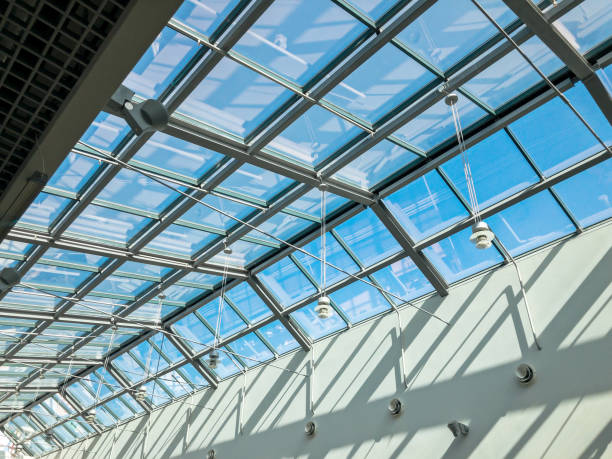
The primary purpose of a skylight is to provide natural illumination. A well-designed daylighting system can make large commercial interiors feel brighter and more comfortable.
Natural daylight can also reduce the need for artificial lighting during suitable periods of the day. Research into commercial toplighting has found that properly designed skylight systems can provide meaningful lighting-energy savings, although the actual benefit depends on factors such as skylight area, glazing performance, climate and building operation.
2. Potential Energy Savings
Artificial lighting can represent a significant part of a commercial building’s electricity consumption. Introducing daylight through roof glazing can reduce the amount of electric lighting needed during daylight hours.
However, energy performance should be assessed as part of the complete building design. The skylight’s thermal properties, solar heat gain, lighting controls and building orientation can all influence the overall result.
3. Improved Interior Environment
A naturally lit commercial space can feel more open and pleasant than a building that relies entirely on artificial lighting. Offices, retail spaces and educational buildings can particularly benefit from carefully planned daylight.
For industrial buildings, better daylight distribution can also make large work areas easier to navigate and use.
4. Flexible Design Options
Commercial dome skylights are available in different sizes, shapes and glazing configurations. This allows architects and building owners to select products according to the dimensions and requirements of the roof.
Some commercial systems are available in standard sizes, while bespoke solutions can be produced for specific projects.
5. Ventilation Options
Not every skylight needs to be fixed. Opening dome skylights can provide natural ventilation as well as daylight.
Depending on the system, ventilation can be manually or electronically controlled. Commercial rooflights may also be designed to support smoke and heat exhaust ventilation where the appropriate system and certification are specified.
Choosing the Right Dome Skylight Material
The glazing material is one of the most important decisions when purchasing a commercial dome skylight.
Polycarbonate Dome Skylights
Polycarbonate is widely used for commercial and industrial rooflights because of its combination of strength, durability and relatively low weight. Multiwall configurations can also provide additional thermal performance.
For buildings where impact resistance and long-term durability are important considerations, polycarbonate can be an attractive option.
Acrylic Dome Skylights
Acrylic is another established skylight material. It can provide good light transmission and is available in various configurations.
The appropriate material depends on the building’s environment, performance requirements, budget and applicable standards.
Glass Skylights
Glass can provide a more premium architectural appearance and may offer strong thermal and optical performance when appropriately specified. However, glass systems can have different structural, weight and cost considerations compared with lightweight dome systems.
For many industrial and commercial applications, polycarbonate remains a practical choice where durability and cost are important.
Fixed or Opening Commercial Dome Skylights?
Before purchasing a dome skylight, determine whether the building requires daylight only or both daylight and ventilation.
Fixed skylights are designed primarily to provide natural light. They are suitable when the building already has sufficient mechanical or natural ventilation.
Opening skylights can provide fresh air as well as daylight. They may be useful in warehouses, workshops, kitchens, production facilities and other spaces where ventilation is important.
Automated systems can also be integrated into building-management strategies, allowing ventilation to be controlled according to temperature, occupancy or other conditions.
Energy Efficiency and Thermal Performance
A common misconception is that any skylight automatically improves energy efficiency. In reality, performance depends heavily on the product specification and building design.
When comparing commercial dome skylights for sale, look at the product’s thermal performance rather than focusing only on its price or appearance.
Important specifications can include:
- U-value
- Solar heat gain characteristics
- Light transmission
- Glazing layers
- Frame and upstand performance
- Air permeability
- Weather resistance
- Ventilation performance
Some modern commercial dome rooflights are specifically designed with low U-values and thermal efficiency in mind.
A balance is needed between allowing enough daylight into the building and controlling unwanted heat transfer or solar gain.
Dome Skylights for Warehouses
Warehouses are among the most suitable applications for commercial dome skylights. Large roof areas provide plenty of opportunities to install multiple rooflights across the building.
A series of strategically positioned skylights can create a more even distribution of daylight than relying on a small number of openings. This can be especially valuable in buildings with limited wall windows.
For warehouse projects, designers should consider the height of the roof, floor area, internal layout and location of shelving or equipment when deciding where skylights should be positioned.
Dome Skylights for Offices and Retail Buildings
Modern offices and retail spaces increasingly incorporate daylight as part of their interior design.
In offices, rooflights can brighten meeting rooms, communal areas and deeper sections of open-plan spaces. In retail environments, skylights can also become architectural features that enhance the appearance of the customer environment.
However, glare and solar gain should be considered carefully. Excessive direct sunlight can create uncomfortable conditions or interfere with computer screens and displays. Suitable glazing, shading and orientation can help manage these issues.
Installation on Flat Roofs
Correct installation is essential for any commercial skylight project.
A skylight creates an opening in the roof, so the surrounding waterproofing system must be carefully integrated with the skylight structure. Poor flashing, inadequate sealing or incorrect installation can increase the risk of water penetration.
Commercial dome rooflights can be supplied with upstands designed to integrate with different roof structures and membrane systems. Some systems are compatible with common flat-roof coverings such as EPDM, PVC, bitumen and GRP.
Before installation, the existing roof should be assessed to determine whether it can accommodate the proposed skylight and whether structural modifications are required.
What to Check Before Buying
If you are searching for commercial dome skylights for sale for flat roofs, compare products carefully before placing an order.
Consider the following:
Roof compatibility: Confirm that the skylight is suitable for your roof type and pitch.
Dimensions: Check the required structural opening rather than relying only on the external dimensions.
Glazing: Compare polycarbonate, acrylic and glass options according to project requirements.
Thermal performance: Review the U-value and other relevant energy-performance specifications.
Light transmission: Consider how much daylight the glazing allows into the building.
Ventilation: Decide whether you need a fixed or opening system.
Safety: Check impact resistance, fall-through protection and other safety features where relevant.
Waterproofing: Make sure the skylight and flashing system are compatible with the existing roof membrane.
Maintenance: Consider how easily the skylight can be inspected and cleaned.
Warranty: Review the manufacturer’s warranty and any installation conditions.
Are Commercial Dome Skylights Cost-Effective?
The lowest-priced skylight is not necessarily the most economical choice over the lifetime of a building.
A low-cost product may have higher maintenance requirements or lower thermal performance. Conversely, a higher-quality skylight may cost more initially but provide better durability, performance and reliability.
The best approach is to compare the total value of the skylight, including purchase price, installation, expected maintenance, energy performance and lifespan.
For large commercial projects, it can also be worthwhile to compare several quotations and product specifications rather than selecting a supplier based only on headline price.
Maintenance and Long-Term Performance
Regular inspection is important for commercial rooflights. Building owners should check the glazing, seals, frames and surrounding roof area for signs of damage or deterioration.
Particular attention should be given to:
- Cracks or damage to the glazing
- Deteriorating seals
- Blocked drainage
- Damaged flashing
- Corrosion or frame deterioration
- Leaks around the roof opening
- Condensation or moisture problems
Regular maintenance can help identify small problems before they develop into expensive roof repairs.
See also: The Ultimate Guide: Top 10 HRMS Software for Businesses in 2026
Conclusion
Commercial dome skylights for sale for flat roofs offer a practical way to introduce natural daylight into warehouses, factories, offices, retail buildings and other commercial properties. Their flexible designs, durable glazing options and availability in fixed or opening configurations make them suitable for a wide range of modern roof projects.
When selecting a skylight, businesses should look beyond the initial purchase price. Thermal performance, light transmission, ventilation, durability, roof compatibility, safety and installation quality can all influence the long-term value of the product.
With careful planning and professional installation, commercial dome skylights can help create brighter, more functional interiors while becoming an effective part of a building’s overall daylighting strategy.