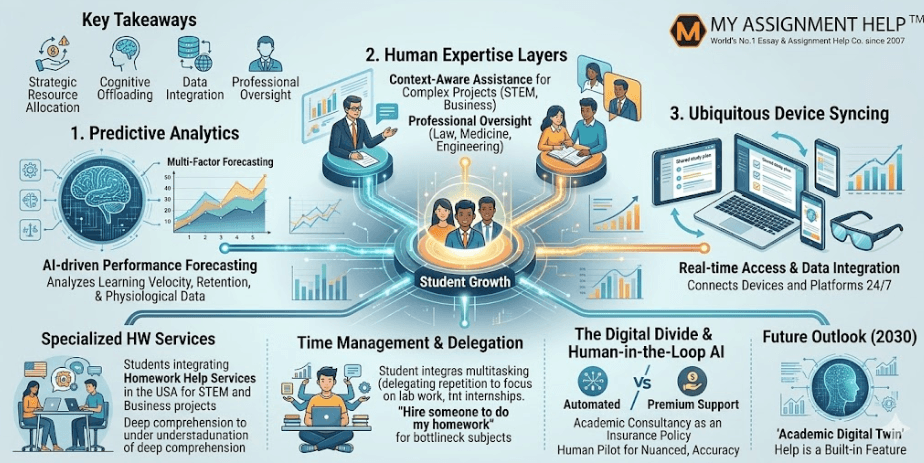
As we navigate the academic landscape of 2026, the traditional boundaries of the American university experience have dissolved. The “Smart Study” Ecosystem has emerged as the dominant paradigm, replacing the fragmented learning methods of the past decade. This shift is characterized by the seamless integration of digital tools, wearable technology, and professional human expertise, all aimed at optimizing the student’s cognitive journey. In the United States, where the cost of higher education continues to rise, students are no longer just “learners”—they are managers of their own intellectual capital, utilizing sophisticated support systems to ensure every hour spent studying yields maximum ROI.
A critical component of this ecosystem is the move toward specialized, context-aware assistance. Within the high-pressure environment of Ivy League institutions and state universities alike, students are increasingly integrating Homework Help Services in the USA into their daily academic workflows. These services have transitioned from simple tutoring to becoming essential data nodes within the smart study network. By providing real-time clarifications and structural guidance on complex STEM and business projects, these services ensure that students don’t just complete their tasks but deeply comprehend the underlying mechanics of their coursework.
The acceleration of digital transformation in education has also led to a significant change in how time is managed. Students today recognize that high-level synthesis and creative application are the skills that lead to career breakthroughs, while repetitive, lower-tier tasks can be strategically outsourced. As a result, it has become common for ambitious undergraduates to hire someone to do my homework, particularly for foundational subjects that act as bottlenecks to their specialized research. This strategic delegation allows them to focus on internships, lab work, and networking—the very activities that define success in the modern US job market.
Personalized Learning Pathways and Predictive Analytics
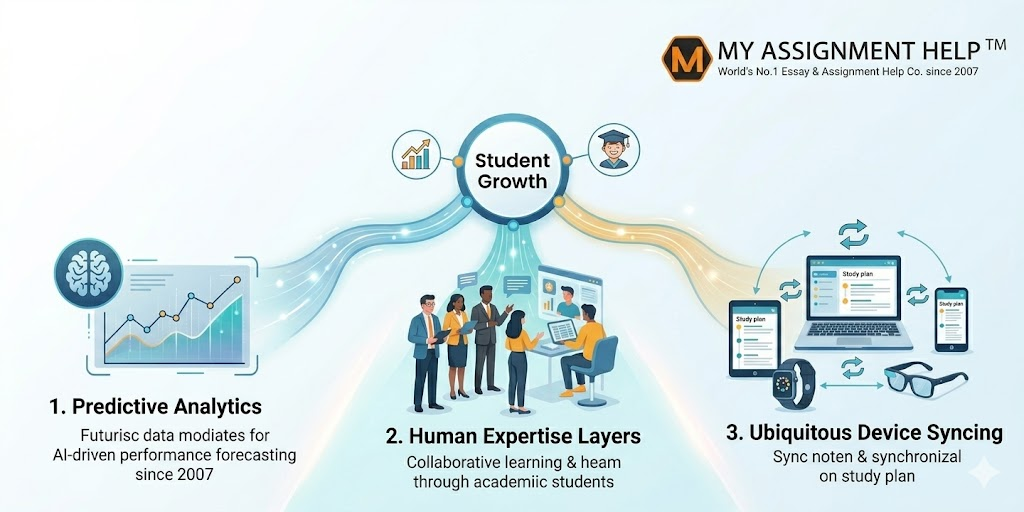
In 2026, the concept of a “generic” study plan is obsolete. The modern US student utilizes personalized learning pathways driven by platforms that analyze unique learning velocity, retention rates, and even physiological data such as focus levels. This data is then used to construct a hyper-personalized academic calendar. If the system detects a decline in comprehension during a late-night session, it may automatically suggest a 15-minute intervention with a professional consultant to ensure the student remains on track.
This level of technological integration has fundamentally altered the student-institution relationship. Universities are now focusing on “human-machine” collaboration, encouraging students to use all available digital resources to bolster their GPA. By utilizing smart study ecosystems, students can effectively “level the playing field,” ensuring that those with significant extracurricular or work commitments still have access to top-tier academic support that is available 24/7.
Generative AI in Classrooms and the Digital Divide
The widespread adoption of Generative AI in classrooms has fundamentally shifted how assignments are designed and graded. While these tools offer instant feedback, they have also highlighted a growing digital divide—the gap between students who have the resources to access premium, human-verified support and those who rely solely on basic automated outputs. To bridge this gap, academic consultancy services have become an insurance policy against failure. Recent data from the 2025 Bureau of Labor Statistics and education think tanks show that students who use integrated support systems are 35% more likely to secure high-paying entry-level roles.
Key Takeaways
- Strategic Resource Allocation: Viewing academic success as a project management task where delegation is a key skill.
- Cognitive Offloading: Using tech to handle rote tasks, freeing the mind for higher-order synthesis.
- Data Integration: Syncing homework platforms with wearable tech to optimize study times and prevent burnout.
- Professional Oversight: Relying on human experts to ensure that assignments meet the rigorous standards of US grading rubrics.
Building Authority: The Role of Human-in-the-Loop AI
While AI is the engine of the Smart Study Ecosystem, human expertise remains the pilot. In 2026, the most effective support models use a “Human-in-the-Loop” approach. This means that while an AI might draft a basic outline or gather research data, a human expert from a reputable service ensures the content is nuanced, contextually accurate, and free of the hallucinations often found in generative models. This dual-layered approach is particularly important in fields like Law, Medicine, and Advanced Engineering, where precision is non-negotiable.
Future Outlook: Beyond 2026
Looking toward 2030, the integration will only deepen. We expect to see the rise of “Academic Digital Twins”—simulated versions of a student’s learning profile that can test different study strategies before the student ever opens a book. In this future, the services that provide professional human support will become even more integrated into the software themselves, creating a world where help is not sought, but is simply a “built-in” feature of the educational experience.
See also: Health Technology Innovations
Frequently Asked Questions (FAQ)
Q: How does a Smart Study Ecosystem improve my grades?
It identifies your learning gaps in real-time and provides the specific resources or human expertise needed to close those gaps immediately.
Q: Is it common for US students to use professional academic help?
Yes, in 2026, it is considered a standard part of a high-achieving student’s toolkit, similar to a professional networking coach.
Q: How do these services ensure the work meets university standards?
Reputable services employ experts familiar with the specific academic standards and formatting requirements (APA, MLA, Chicago) used by major American universities.
Author Bio
Avery Thompson is a Senior Digital Content Lead and Academic Advisor at MyAssignmentHelp. With a background in educational psychology and a focus on US higher education trends, Avery has spent the last decade helping students navigate the complexities of the digital classroom. Avery is dedicated to exploring how technology and human insight can work together to promote student well-being and academic excellence.
Sources and References
- U.S. Department of Education: “National Educational Technology Plan 2025 Update.”
- Harvard Graduate School of Education: “The Future of AI-Integrated Learning Environments.”
- National Center for Education Statistics (NCES): “Higher Education Performance Metrics 2026.”
- Association for Educational Communications and Technology (AECT) Annual Report.