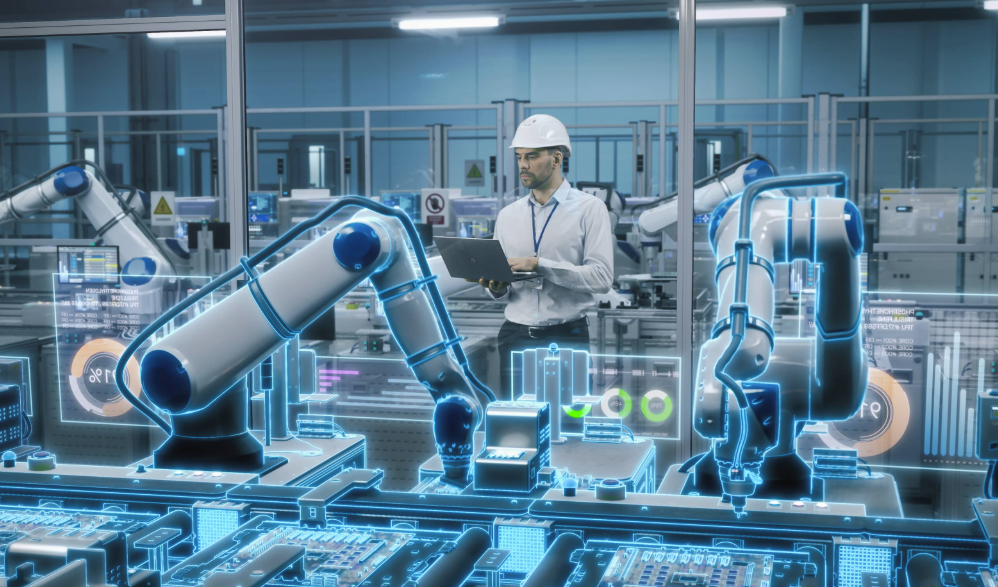
The manufacturing floor is undergoing a transformation that extends far beyond faster spindles or more efficient toolpaths. Industry 4.0 — the integration of digital intelligence, automation, and data-driven decision-making into production — has moved from conference presentations to practical reality. For precision machining, this shift is particularly significant. The components that power modern electronics — housings, heat sinks, connectors, and structural frames — demand tolerances measured in microns and consistency across production runs that can reach hundreds of thousands of units. Meeting these requirements in an era of high-mix, low-volume production requires more than capable machines. It requires an ecosystem of connected systems, real-time data, and intelligent process control.
AI-Native Machining Goes Mainstream
Artificial intelligence has moved from academic pilots to integral production tooling. AI-driven machining uses real-time sensor feedback to adjust feeds, speeds, and toolpaths automatically, responding to vibration, load, or temperature changes as they happen. The result is more consistent surface quality, lower tool wear, and fewer production halts.
For manufacturers producing aluminum electronic components, this capability is transformative. Aluminum’s excellent machinability makes it ideal for high-speed production, but thin-walled structures common in electronic enclosures and heat sinks can be susceptible to vibration and deflection. AI-powered adaptive control compensates for these tendencies in real time, maintaining dimensional accuracy even on complex geometries.
Digital Twins and the Virtual Factory
Digital twin technology is emerging as a critical enabler for precision manufacturing in the Industry 4.0 era. A digital twin is a virtual replica of a physical machine or process. Engineers use these models to simulate machining operations before the first chip is cut, identifying potential problems and optimizing parameters without interrupting production.
When the physical machine runs, sensors feed data back to the digital twin, creating a continuous learning loop. The virtual model becomes more accurate over time, enabling better predictions and more refined optimization. For complex aluminum components used in electronics, this capability is invaluable. Heat sink geometries, enclosure features, and connector housings can be simulated and optimized before production, reducing development time and minimizing trial-and-error.
See also: The Rise of “Smart Study” Ecosystems: How Tech is Redefining Academic Support in 2026
The Connected Shop Floor
Modern precision machining facilities leverage industrial IoT networks to collect data on every aspect of the machining process — spindle loads, axis positions, coolant pressure, tool wear, temperature, and vibration. This data flows to manufacturing execution systems that track work orders, quality results, and machine utilization in real time.
Predictive maintenance systems analyze sensor data to forecast tool failures before they occur, reducing unplanned downtime. Real-time quality monitoring catches defects early, preventing scrap and rework. For electronics manufacturers, where component reliability is non-negotiable, this level of visibility translates directly to product quality and customer confidence.
Aluminum’s Role in Electronics Manufacturing
Aluminum has become the material of choice for countless electronic applications. Its lightweight properties, excellent thermal conductivity, and corrosion resistance make it ideal for enclosures, heat sinks, and structural components in consumer electronics, telecommunications equipment, and automotive electronics. Advances in CNC technology have enabled the production of increasingly complex aluminum electronic components, supporting the growing demand for miniaturization and efficient thermal management.
Consumer devices like smartphones, laptops, and tablets rely on precision-machined aluminum enclosures that are both durable and aesthetically refined. In telecommunications and networking infrastructure, aluminum heat sinks and housings dissipate heat from high-performance processors and power amplifiers. Automotive electronics increasingly specify aluminum for sensor housings, control unit enclosures, and connector bodies, where weight reduction and thermal management are critical.
The 6061 alloy is the workhorse of the industry — versatile, weldable, and available in various tempers. The 7075 alloy offers higher strength for structural applications where rigidity is essential. Each alloy demands specific machining parameters, and shops that have developed documented processes across these grades deliver more consistent results.
The Electronics Manufacturing Challenge
Electronics components are among the most demanding applications for precision machining. Tolerances are measured in microns. Surface finishes must be flawless. Burrs are unacceptable. These requirements extend across the entire production chain — from the initial material selection through final inspection.
For aluminum precision CNC machining, these demands translate into specific operational requirements: high-speed machining capability to achieve fine finishes on thin-walled components, multi-axis equipment to produce complex geometries, and in-process probing to verify critical dimensions without removing parts from the machine.
The 2026 technology outlook highlights that the biggest challenges facing manufacturers are no longer speed or throughput, but data veracity, predictive reliability, and the elimination of unplanned downtime. High-mix, low-volume production has become the norm, turning traditional setup and changeover times into major profit drains. This makes the integration of connected systems and intelligent process control not just beneficial but essential.
Automation and Lights-Out Production
Automation has become a strategic imperative in precision manufacturing. Robot-tended CNC cells, automated pallet changers, and self-calibrating tool presetters are becoming standard practice. The goal is lights-out machining — continuous, unattended production supported by smart scheduling and remote monitoring.
For electronics component suppliers, this capability is particularly valuable. Many electronic components are produced in high volumes, making automation essential for cost-effective production. At the same time, the complexity of these components demands the precision that only advanced CNC machining can deliver. Automation bridges this gap, enabling high-volume production without sacrificing quality.
Manufacturing as a Strategic Asset
For electronics manufacturers, the quality of precision-machined components directly affects product performance, reliability, and cost. A poorly machined heat sink can cause thermal throttling. An enclosure with inconsistent dimensions can compromise assembly. A connector with rough surface finish can fail in the field. These are not hypothetical risks — they are real-world consequences that separate quality suppliers from the rest.
The right partner for aluminum electronic components understands these requirements and has built their operation around delivering consistent quality at scale. They maintain documented processes, rigorous quality systems, and traceability from incoming material to finished component. They invest in advanced equipment and workforce development to stay ahead of evolving demands.
Looking Ahead
The manufacturing industry continues its digital transformation. The same forces that have reshaped precision machining over the past decade — AI, IoT, and automation — will continue to drive innovation for years to come. In electronics manufacturing, where components are becoming smaller, more complex, and more demanding, these capabilities will only become more essential.
The shops that have invested in connected systems, adaptive control, and lights-out automation are positioned to capture the most demanding programs. For electronics manufacturers, partnering with these shops is not just a procurement decision — it is a strategic one with direct implications for product quality, time-to-market, and competitive advantage.
In an era where every component matters, the combination of advanced technology and proven material expertise has never been more important. The companies that embrace this reality will lead their industries forward. The others will struggle to keep pace.